The new version aims to model any kind of scratched surfaces.
Mostrando entradas con la etiqueta Unity. Mostrar todas las entradas
Mostrando entradas con la etiqueta Unity. Mostrar todas las entradas
11 enero 2016
SAS - Standard Anisotropic Shader
During December I worked on an update of my Cloth Shader for Unity 4 After some days of work several ideas came to my head. "What if it is suitable for metals?", "What if I make a metals demo?" "What if I try to shade a cymbal? "What if supports transparency?", "What if... carbon fiber!!", "What if, what if...." So it started to grow until I realized it was too big/flexible to deliver it as a simple update. Instead of that, I have released it as an upgrade for previous buyers of the old cloth shader.
The new version aims to model any kind of scratched surfaces.
The new version aims to model any kind of scratched surfaces.

23 junio 2015
Fog Volume 2 improvements
I wanted to learn about volumetric rendering (raymarching) for long time but never had the chance until now.
A client asked me to make a cloud effect, so I have spent some time learning about this topic while improving Fog Volume.
First thing that Fog Volume was missing was the intersection with scene objects, which is solved now. A better accumulation method has been also implemented as well as a rough method for lighting (subject to change in future updates).


A client asked me to make a cloud effect, so I have spent some time learning about this topic while improving Fog Volume.
First thing that Fog Volume was missing was the intersection with scene objects, which is solved now. A better accumulation method has been also implemented as well as a rough method for lighting (subject to change in future updates).


09 abril 2015
Tileable textures from high poly
I have had the chance to get back to the art side of gamedev working for my new client. I'm quite happy with this job because it's an opportunity to learn art related topics. I have never worked as artist in a company, so... nice! But at the end I always end up as 1D/2D/3D/FX/Lighting artist, so Ill be doing a little bit of everything :)
After reviewing the game, I felt it was a must to improve the ground they currently have. So I put some extra effort to learn how to make tileable textures from sculpted meshes. The main motivation was basically to have a solid workflow, relatively fast and compatible with PBR. By doing so I would get the correct data I needed to include DDO into the process.
Here are three textures blended together with a shader I wrote in Unity.


After reviewing the game, I felt it was a must to improve the ground they currently have. So I put some extra effort to learn how to make tileable textures from sculpted meshes. The main motivation was basically to have a solid workflow, relatively fast and compatible with PBR. By doing so I would get the correct data I needed to include DDO into the process.
Here are three textures blended together with a shader I wrote in Unity.


04 febrero 2015
Car rendering: Delving into details
A year ago, Unity Technologies requested me to create this demo. It was a huge load of work but finally, it was worth the effort. This article digs into the details of the project.
Environment
The project went through different stages. It was first shown at the GPU Technology Conference in March ’14.
And I came up with this:

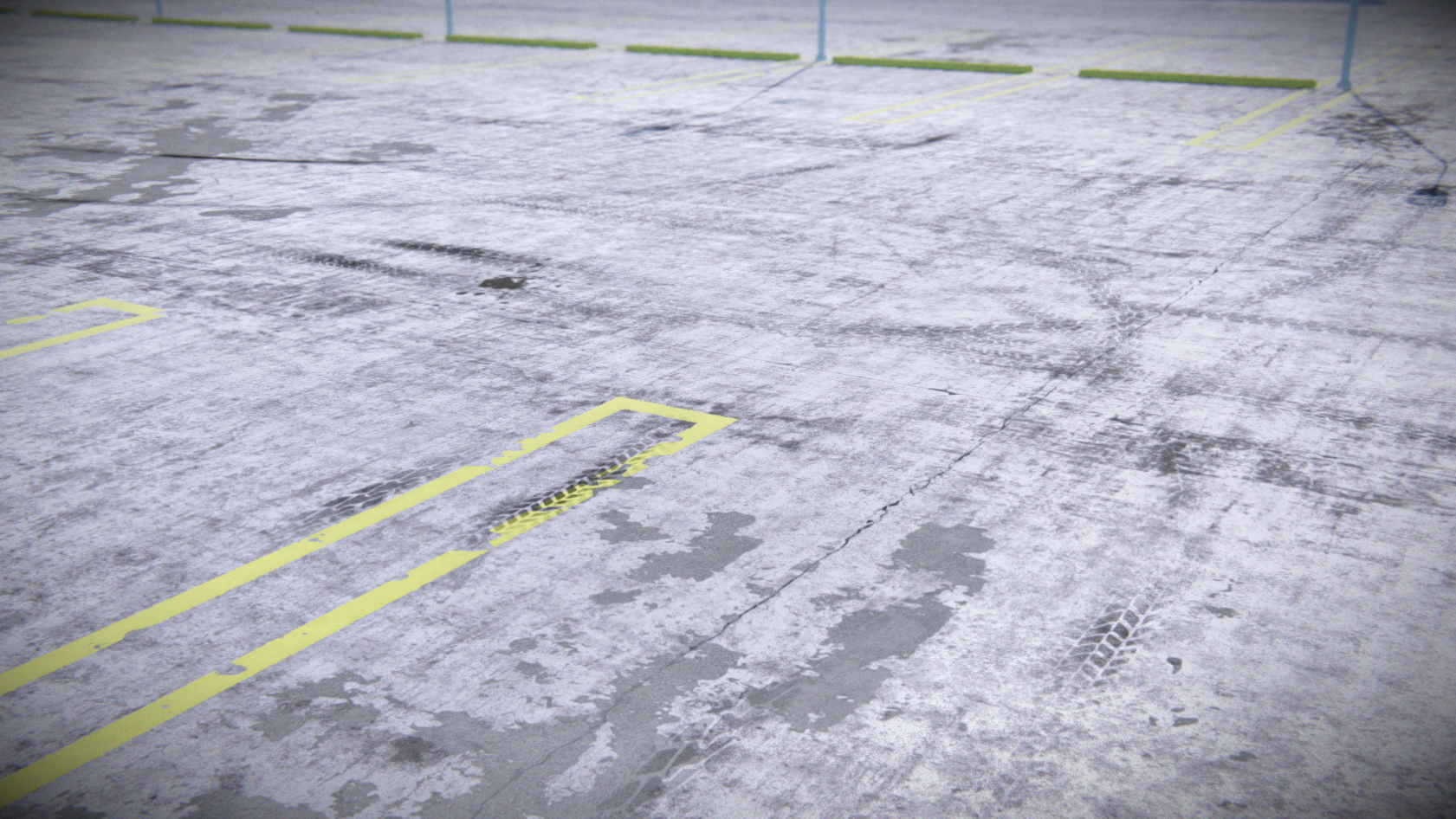

I thought that it would be a good idea to create some cracks with relief mapping, so I modelled a few cool shapes in zBrush in order to get a good depth map.
.png)

Another idea I came up with was the creation of a reflective floor. As it was a very rough surface, I added some extra magic to the Aras’ planar reflection script to blur the result.

Scene Manager
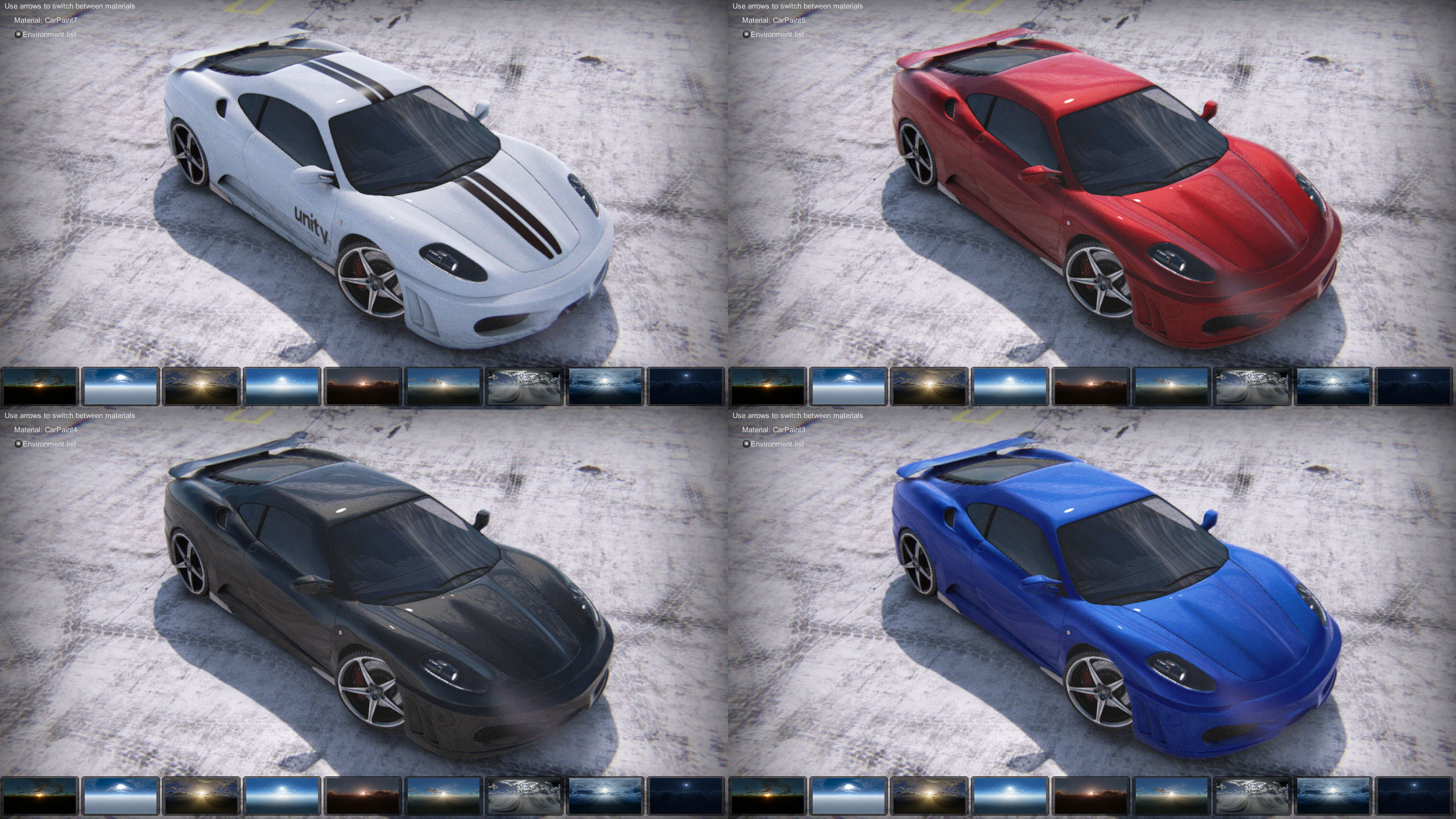
This demo allows you to switch between different lighting conditions and materials. Everything was planned to experience these changes in real-time and this involved managing skyboxes, lights, materials, atmosphere, ambient light and reflections.

As you can see here, there are some arrays where data is stored. Material list stores the preconfigured materials. Sky Lighs is a class that stores a directional light, Fog Volume, GUI thumbnail, skybox & convolved skybox.

This data is read every time you clic over the GUI images so the new lighting conditions are set.
Some other stuff, such as Tonemapping and skybox exposure, is controlled by the Material Switcher script. The script’s name doesn't match at all with its functionality, does it ? ;)
Lighting
- Sky: I used the AllSky package for the skybox as well as Fog Volume to add some atmosphere.
- Dynamic reflections: Unity 5 has a new method to capture HDR longitude-latitude maps in real-time called "Reflection Probe". It is quite easy to use since they have included shader macros that make its usage straightforward.

- Static Reflections: Unity 5 is able to convolve HDR L-L cubemaps taking care about edges and mipmaps. This method was used for reflections before "Reflection Probes" were implemented.

- Car GI: The guys of Unity provided me with a script to switch between different skyboxes. It also had a magic function to compute Spherical Harmonics from a given skybox.
Car model
We started with a very rough version of the car that Luis Carrera made some years ago. We decided to hire him to polish the model, and he did a very nice job indeed. After we delivered the garage demo for the GTC, we stopped the project for a while and I got back on my skin renderer to build a demo for eisko guys.
Once that the skin rendering demo was finished, I went back to the car project, but this time without Luis. He had been hired by another company, so I had to find a new partner. I decided to bring Fredo to this project. He is the perfect mercenary, fast and clean.
I asked him to remake several parts of the car: engine, wheels, brakes, exhausts, and some bodywork. He did an awesome work there. I immediately fell in love with it.
Once that the skin rendering demo was finished, I went back to the car project, but this time without Luis. He had been hired by another company, so I had to find a new partner. I decided to bring Fredo to this project. He is the perfect mercenary, fast and clean.
I asked him to remake several parts of the car: engine, wheels, brakes, exhausts, and some bodywork. He did an awesome work there. I immediately fell in love with it.


Car shader
The shader was the first thing I did. I made a demo scene where I was able to switch between different lighting conditions and materials. I tried to test every possible situation so I made many different materials with it.
Car lights
Here comes another interesting detail: I tried to simulate how light travels along lamps according to how they are built. I had to write several shaders for this, one for each piece of plastic with their own behaviour.

They are fully functional, so you can turn them on and off in real-time.


Headlights are using a cookie texture to break the light shape as if refracting.

They are fully functional, so you can turn them on and off in real-time.
I have also added a sort of fake volumetric effect to the headlights to emphasize the light beam.
Headlights are using a cookie texture to break the light shape as if refracting.
Post-process
Most of them are built-in image effects. I use Lens Dirtiness and Camera Lens, which is a crazy complex thing I did that computes physically correct optical dispersion based on glass composition. But that is another story.

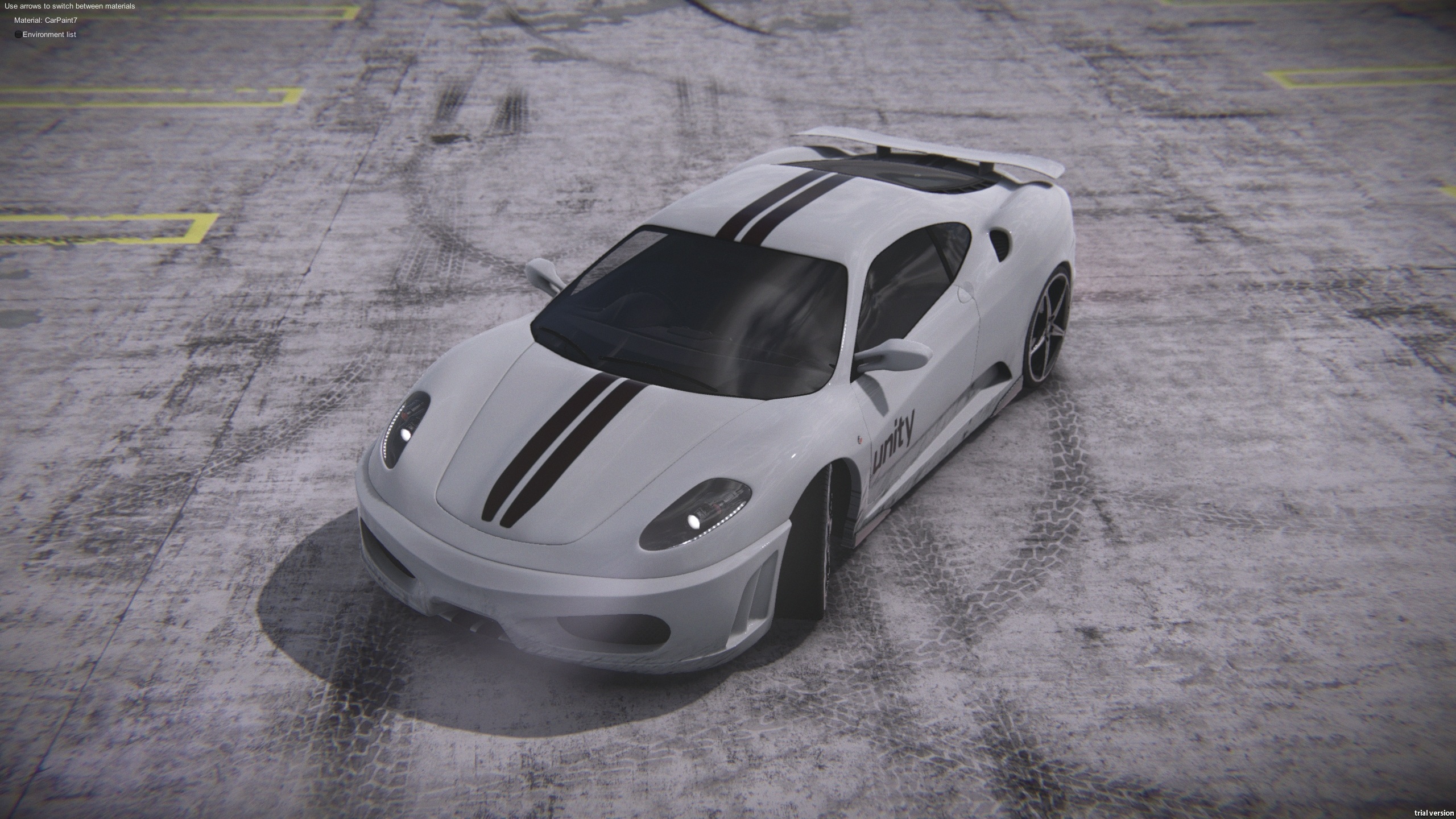
Gallery


Video
10 abril 2014
High end car demo for Unity Technologies
Luis Carrera and I worked closely together developing this demo for Unity Technologies.
We were asked to create a real time high end car rendering with layered paint and physically based shaders.
While Luis was working on the car modelling, I focused on the rendering side of the demo and its functionality. Once we got those tasks done, we focused our attention on the environment. We both worked on the design, modelling and texturing and when the time came, I put everything together.
This took us about 4 weeks non-stop. The demo was shown at the 2014 GPU Technology Conference.

08 abril 2014
Foggy Lights
"Foggy Lights" is a visual effect that creates a light halo. It provides you with the option to add a light that matches the glow color and intensity in real time. It takes into account scene depth in order to avoid hard intersections with the environment. You can also offset the effect to make it appear closer or further.
05 abril 2014
Dave
After some years using Lee’s scan, I had the feeling that it was time to switch to another model. It wasn’t easy to find a good one so I decided to start zBrush and see what happened. I’d never tried to model a face before so it was a long process. After an exhausting month of December, Dave was born.

Here you can find a making-of. I promise you lots of fun!
What's in that document?
A zombified Lee Perry:


An IKEA chair:

And pores, billions of pores!!!

Here you can find a making-of. I promise you lots of fun!
What's in that document?
A zombified Lee Perry:
A Slipknot tattoo surrounded by "junkie" veins:
And pores, billions of pores!!!
30 enero 2014
Fog Volume for Unity
After some requests I decided to create this new asset for the store. It consists of a boxed fog volume. It uses a cube geometry with a shader


Watch this video to see how it works.
It also models light in-scattering, so you can use it outdoors.
Android tests:
Suscribirse a:
Entradas (Atom)